All Saints’ Day (Twenty-third Sunday after Pentecost)
All dressed in white
Revelation 7:9–17
Two weeks ago, I held up a book and read a quote from it. The author of that book saw it, clipped that part of the sermon and shared it on her social media. So if one book got attention, I’m going to try to quadruple my odds: I’m going to hold up four books today. We’ll see how that goes.
In March of 1865, Abraham Lincoln stood on the east portico of the U.S. Capitol and delivered his second inaugural address. This was close to the end of the Civil War. The North was on the verge of victory, and Lincoln had a dilemma. What he said now, at this crucial point, would frame how the victory was perceived. It would be easy to gloat and boast about the North’s moral superiority. But would that help a fractured nation to heal?
As Michael Ignatieff points out in his book On Consolation, Lincoln could have defined the great cause of the war as Southern slavery and brought the whole weight of moral condemnation down upon one side. He would have been tempted to do so. Instead, he framed slavery as the original sin of America: an offence that the whole nation, North and South, must recognize as its own.
There was a mixed reaction to that address, a sense of confusion that Lincoln didn’t spout vengeance or retribution. By painting the whole country with the same brush, was he perhaps whitewashing the history of the South?
In her debut book of poetry, Duckweed 浮萍, local author Kathryn Lennon writes about her mixed heritage as a person of both Chinese and Irish descent. In one of her poems, “Dragons must have been there,” she writes about the Chinese labour that was used to build the railroad across this country. It is a poem for the train tracks, the “tracks that splintered spines.”
Work on the railroad was, by the way, why my great-grandfather emigrated from China. They say there was one Chinese life for every mile of that railroad.
Lennon remembers back to the Heritage Minutes they used to play during our Saturday morning cartoons: “these race lines, these power lines, these rail lines are the cracks in the foundation of this nation’s heritage.” In the Heritage Minute of the last spike, they’re all white. Out of sight, out of mind: where are the Chinese workers, the silent spikes who broke their backs for those rail lines? “Selective amnesia creates collective amnesia.”
Here, in one of the stories we tell ourselves about our national identity, we have an example of whitewashing the past: an attempt to hide the sting.
We don’t just whitewash things in the distant past, either. In his book The Wretched of the Earth, Frantz Fanon writes about his experience as a psychiatrist during Algeria’s fight for freedom from France. He documents how combatants on both sides of that conflict would whitewash their complicity, as though they were incapable of truly seeing the harm they participated in. Rather than perpetrators of violence, they saw themselves more like workers in an office job.
It’s not that they didn’t have guilty consciences. They just tried to reframe the past in ways that might free them from guilt.
Treating one of the French police officers involved in torture during interrogations, Fanon says this man knew perfectly well that all his problems stemmed directly from the kind of work conducted in the interrogation rooms, though he tried to blame everything on “the troubles.” The officer asks Fanon to help him do his job: can you help me do it with less guilt? He’s trying to whitewash the actions he is currently participating in.
The term “whitewash” comes from the paint used to cover buildings: a cheap layer to hide the imperfections. In the same way, we often whitewash the past, covering it with a layer of storytelling that makes everything seem cleaner than it was.
In my twenty years of ministry, I’ve done a lot of whitewashing. It happens at every funeral. At most funerals I do, I don’t know the deceased. I meet with the family and ask questions about their loved one, and it always starts with all the most wonderful things about them: how kind and gentle they were.
But if the conversation goes on too long, or I pry a little too much, I might get glimpses of the rest of the story: hints of addictions and troubles, hushed histories of family conflicts, whispers of things we’re not supposed to say at the funeral itself.
I try to steer the conversation away from such things, choosing willingly to pick up my paintbrush and whitewash alongside them. And in the funeral, we truly do transformational work. Disagreeableness gets reframed as stubbornness; misanthropy as quirky individuality. The obnoxious person who railroaded everyone else in their lives is celebrated for their zest for life. The quiet person who never left their front door is praised for their reflective prayerfulness. The miser becomes a sentimental saver; the gang leader, a community organizer.
People have said to me, “It must be hard to do a funeral for someone you don’t know.” But in reality, those are the easiest. When I don’t know the details of someone’s life, it’s easier to paint them with just the shade of whitewash that the family likes best.
Is it a lie? Is it a misrepresentation of history?
Now, I will say in my defence that I never tell a falsehood. But maybe, like Lincoln, I’ve gone gentle where I could have been hard. Or maybe, like those Canadian Heritage Minutes, I’ve left out parts of the story. Or, like Fanon with his patients, I haven’t challenged guilty consciences as I could have.
But then again, I also think that this is what God does. I think that is redemption.
In our scripture reading today, we have a beautiful image of heaven from the book of Revelation. In it, John looks out on a multitude from every nation. He sees everyone, from all tribes and peoples and languages, robed in white and standing before the throne of God, singing: “Blessing and glory and wisdom and thanksgiving and honour and power and might be to our God forever and ever.”
John is asked who these people dressed in white are. The answer: these are they who have come out of the great ordeal; they have washed their robes and made them white in the blood of the Lamb.
These people are us, all of us, from every nation, who at the end of time will join the great circle of saints to praise God forever. All dressed in white.
It is symbolic, of course. You won’t actually have to wear white. I look terrible in white myself.
For ancient people, white was the sign that something had been cleaned. The robes of the heavenly host are white, but they did not start out white. As the elder says to John, they have washed their robes and made them white.
These are people who have come through a great ordeal: through violence and hunger, through stress and anxiety and mistrust, through a messy, complicated world where they are just as stained, just as soiled as the rest of us. We cannot live in this world without becoming complicit in all its evils. From the groceries I buy to the gas I use to get to church, my moral compass is muddied, however pure I might try to be. No one is coming out of this great ordeal of life without getting a bit dirty.
But this is the grace and beauty of God: God washes.
It’s not actually whitewash; that would be too superficial. God takes the tattered rags of who we’ve become and washes us in a way that makes us whole again. God’s whitewash goes right through. The robes aren’t just painted white; they are made white. And in that process, the mistakes of our past, the folly and foolishness of our behaviour, the ways we failed to show love or shrank into protectiveness: all of that gets washed away.
What’s left is the memory of all that is wonderful about you. Not a lie, not a falsehood, but the genuine wonderfulness that made you you. Washed in the blood of the Lamb, the sin is gone, and what’s left is who you truly are.
Maybe that’s why families will say to me at the end of a funeral, “You really captured them. It’s like you knew them.” Now, I didn’t know them, and I’m only repeating the nice things the family told me in the first place. But when they hear the life of their loved one echoed back, washed in the blood of the Lamb, what they see is indeed a true reflection of their loved one. This is what they were like.
More importantly, this is how God sees them now: saints in the great host of heaven, all of us gathered at the heavenly banquet, robes and souls white as snow, laughing and praising together.
The poet Kathryn Lennon imagines that future day like a family meal, chatting about the past, where they will say to each other: it’s hard to imagine what one hundred years from now will look like, or how we will get there. “I hope we’ll all have gone deeper than inclusion,” that our children’s children will be seen simply as human, that they will no longer need to turn their collective community energies and creative minds to the work of resisting and reacting; that they will gather around the table and, rather than eating bitterness, they will eat slow.
I promised four books, and here is the last. If you don’t know this book, you’ll at least recognize the picture on its cover: this is our church. It’s a book about our church, written by Ken Munro. One of the candles we lit today was for him.
He tells the story of this congregation, but it’s not just the story of the building. He tells the story of the people themselves. And there’s a story in here about Isabel McRae, whose picture is on the other table there. He talks about her sitting in the balcony on the left, the south side. He writes about all the good work she did as a teacher, and about the way she inspired missions through the work of the Women’s Missionary Society. For over a hundred years she was an encouragement to this church, and, as you’ll hear at the offering, she continues to be an encouragement even after her death.
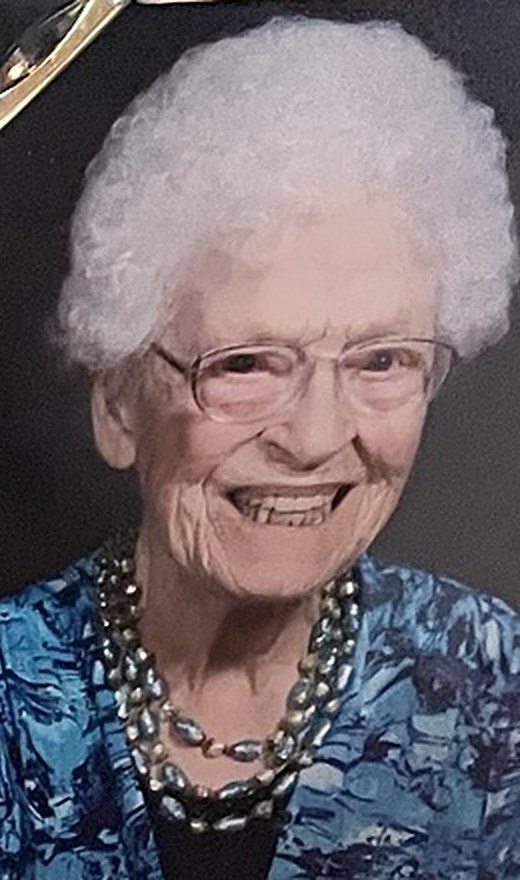
Did Ken write about her foibles? Did he tell us about all the times she messed up, or made people angry? Did he write about her mistakes or faults? I’m sure she wasn’t perfect. But you know what? I don’t need to know all those bits. Today I want to celebrate her the way that God celebrates her: washed in God’s love.
As you think of your loved ones, I hope you can see them in that same light. Were they perfect? Of course not. Does that matter?
It’s not whitewashing to remember the good things about them, to let the light of their example shine brighter than their faults. In my opinion, that is an act of love.
In your love, in God’s love, our loved ones are lifted up as saints. Their sins are forgiven; their tattered clothes are made whole again. And for that reason, they stand before the throne of God, where there is no more hunger or thirst or scorching heat, where the Shepherd guides them to springs of the water of life, and every tear is wiped away.
May our tears be wiped away as we remember all the wonderful things about the saints who went before us, all dressed in white.
Amen.
The readings
This Sunday
Hear it in the room
Worship at 11:00 a.m., doors open at 10:30. Everyone is welcome.
Plan your visit